Build a UK Print on Demand Business Without Buying or Storing Stock
Print on demand lets you sell your own designs on products that are produced only after a customer orders. You carry no inventory, rent no storage space and pack no parcels. The free Zero Inventory Academy course and ebook take UK beginners from a first idea to a first sale.
A product business where nothing is produced until it sells
01Print on demand allows designers and entrepreneurs to sell custom products without holding any inventory. Each item is made after the customer has paid, then shipped straight to their door by your fulfilment partner.
02You supply the designs and the marketing. Your print partner supplies the blank products, the printing equipment, the packaging and the delivery. Because you pay for an item only once it has sold, this is among the lowest risk ways to test a business idea online. A design that fails to sell leaves you with no unsold stock.
03The model also works as a marketing channel. Every product that reaches a customer carries your brand into their daily life, and it suits social media content, email campaigns, limited editions and seasonal collections.
The print on demand process in four stages
You createPrepare your artwork and publish it in your own store or on a marketplace.
A customer ordersThe shopper pays your retail price at checkout.
Your partner printsThe order passes automatically to a printer, who produces the item.
The product shipsThe item is packed and delivered under your brand, and you keep the margin.
Low startup costs, with no bulk orders or minimum print runs
No warehouse, no packing and no trips to the post office
The freedom to test many designs and niches quickly
Flexible enough to run alongside a job, studies or another business
Simple to grow without changing how you work
The ability to serve customers worldwide from a single store
Considerations
What to plan for
The cost per item is higher than bulk printing, so pricing needs care
Quality varies between suppliers, so always order samples first
Good ideas are plentiful, but visibility, automation and growth are where many stores stall
Competition is real, so a focused niche matters more than a large catalogue
Consistent and honest marketing is essential
Getting Started
Seven practical steps to launch your first print on demand store
You do not need a design qualification or a large budget. You need a clear niche, a small set of strong designs and a process you can repeat. This is the route that most successful sellers follow.
Begin with your niche
Focused products consistently outperform generic ones. Humorous T-shirts is a crowded market, whereas night shift nurse humour or trail running dads is a community with its own language, its own jokes and many reasons to buy gifts.
A well chosen niche gives your designs a ready audience, simplifies your marketing and helps you decide which customisable products will appeal to those buyers.
Start with an audience you already know, such as a hobby, profession, pet breed, fandom or life event. Look for passionate communities, regular gifting occasions and gaps in what is currently on sale.
Confirm demand before designing
Review search trends, marketplace bestsellers, social media hashtags and competitor reviews. If people are already buying and asking for more variety, you have a strong signal to proceed.
Match products to your buyers
Pair each product with its audience. Mugs suit coffee lovers and teachers, desk mats suit gamers and bandanas suit dog owners. Begin with two or three products rather than thirty.
Create strong designs
Use original artwork, typography or personalised name and date layouts. You can work with design tools or hire a freelancer, but make sure you hold the rights to everything you upload and avoid trademarked phrases and copied characters.
Select a platform and print partner
Sell from your own store or through a marketplace. Look for a partner with product creation tools, live customer previews, dependable UK or regional fulfilment and automatic routing to the nearest printer. Always order samples before you launch.
Price for profit
Add together the product cost, postage, platform fees and payment fees, then include your margin. Test prices, bundles and free delivery thresholds rather than guessing.
Launch, promote and improve
Promote your range through social content, email, collaborations and seasonal collections. Track what sells, build on your best designs and retire the weaker ones. Plan for automation early so that growth does not become a bottleneck.
Want the complete blueprint?
Request the free ebook and gain access to the Zero Inventory Academy course.
Ten print on demand business ideas worth considering in 2026
From popular apparel to subscription boxes, these are ten established product routes. Choose one, build depth in a single niche and expand once it is working.
01
T-shirts and hoodies
The classic starting point. Create bold, humorous or niche themed apparel for gamers, gym goers, hobbyists and anyone who enjoys a good slogan. Demand is high and the design possibilities are endless.
Begin with one tight theme and release a small capsule collection.
02
Mugs and drinkware
Illustrated mugs for coffee lovers, teachers and pet owners sell throughout the year and peak around birthdays, Mother's Day and Christmas. The modest price makes them an easy gift.
Pair a mug with a matching tote bag or print to raise the order value.
03
Phone cases and tech accessories
Cases and skins with striking graphics or fandom themes appeal to customers who use their devices to express themselves. Phones are replaced often, which creates repeat demand.
Keep track of new phone models so your range stays current.
04
Personalised home decor and art prints
Wall art, cushions and canvas prints in fashionable colours and typography sell well. Adding a name, date or location turns an ordinary product into a keepsake and supports a higher price.
Offer personalisation for weddings, new homes and anniversaries.
05
Custom travel accessories
Passport holders, luggage tags and packing cubes appeal to frequent travellers and make good gifts. Destination, city and couple themed designs perform especially well ahead of holiday seasons.
Time your promotions for school holidays and summer booking peaks.
06
Pet themed merchandise
Pet owners spend generously on their animals. Custom bowls, mats and bandanas, especially breed specific designs, reach devoted buyers who enjoy showing off their companions.
Focus on one breed first. A design for Cockapoo owners will outsell one aimed at dog lovers in general.
07
Fitness and yoga gear
Yoga mats and water bottles printed with affirmations, symbols or minimalist artwork attract health conscious customers who care about how their equipment looks and feels.
Plan campaigns around New Year resolutions and the spring fitness season.
08
Gaming and desk accessories
Mouse mats and desk mats for gamers and home workers form a fast growing niche. Desk setup culture is strong online, and buyers want their workspace to reflect their personality.
Share desk setup photos that show your products in real use.
09
Event and occasion merchandise
Custom favours, signs and keepsakes for weddings, baby showers and birthdays suit buyers who have a date and a budget in mind. They tend to decide quickly and often order several items at once.
Show clear delivery deadlines to build trust and encourage prompt orders.
10
Subscription boxes
Offer a monthly box of themed or exclusive designs, such as clothing, prints or a mixture of both, for subscribers who enjoy a surprise. Recurring revenue is easier to forecast than occasional sales.
Open with a limited number of places to test demand.
Not sure which idea suits you?
The free ebook helps you compare all ten and choose a sensible starting point.
Everything you need to move from first idea to first sale
The Zero Inventory Academy course is a practical programme that you can follow at your own pace. It sets out the exact process for building a print on demand business in 2026 and leaves out the filler.
The barrier to entry is deliberately low. If you have the essentials below, you can get started.
Who the course is designed for
Complete beginners seeking a realistic side income idea
Artists, illustrators and designers who want to sell their work
Small business owners adding a product range without stock risk
Students and parents looking for flexible projects to run from home
Content creators who want to launch their own merchandise
Anyone curious about ecommerce who wants to try it safely
A computer or tablet
Any modern laptop, desktop or tablet with a dependable internet connection is enough.
Internet access
You will browse marketplaces, use design tools and connect your store online.
No prior experience
You need no background in ecommerce, design or marketing. The course starts with the basics.
A creative mindset
Bring curiosity and a willingness to test ideas. The course covers free and low cost design tools.
A few hours each week
Learn at your own pace around work or study. Regular effort works better than occasional bursts.
An optional small budget
Learning is free. Extras such as product samples or a store subscription are optional, and their cost depends on the provider.
Frequently asked questions
Are the course and ebook really free?
Yes. Both the ebook and the course are free, and you do not need to enter a payment card to register. Third party tools you may choose to use later, such as print partners or store platforms, have their own pricing.
Will I definitely make money?
No one can promise that. Results depend on your niche, your designs, your marketing effort and market conditions. We teach a proven process, but the outcome depends on how you apply it. Please read our Earnings Disclaimer.
Do I need to be good at design?
No. You will learn to work with templates, typography and simple tools, and you will see when it makes sense to outsource design work.
How do I receive the ebook?
Complete the short form below and we will email a download link to the address you provide.
Free Ebook and Course Access
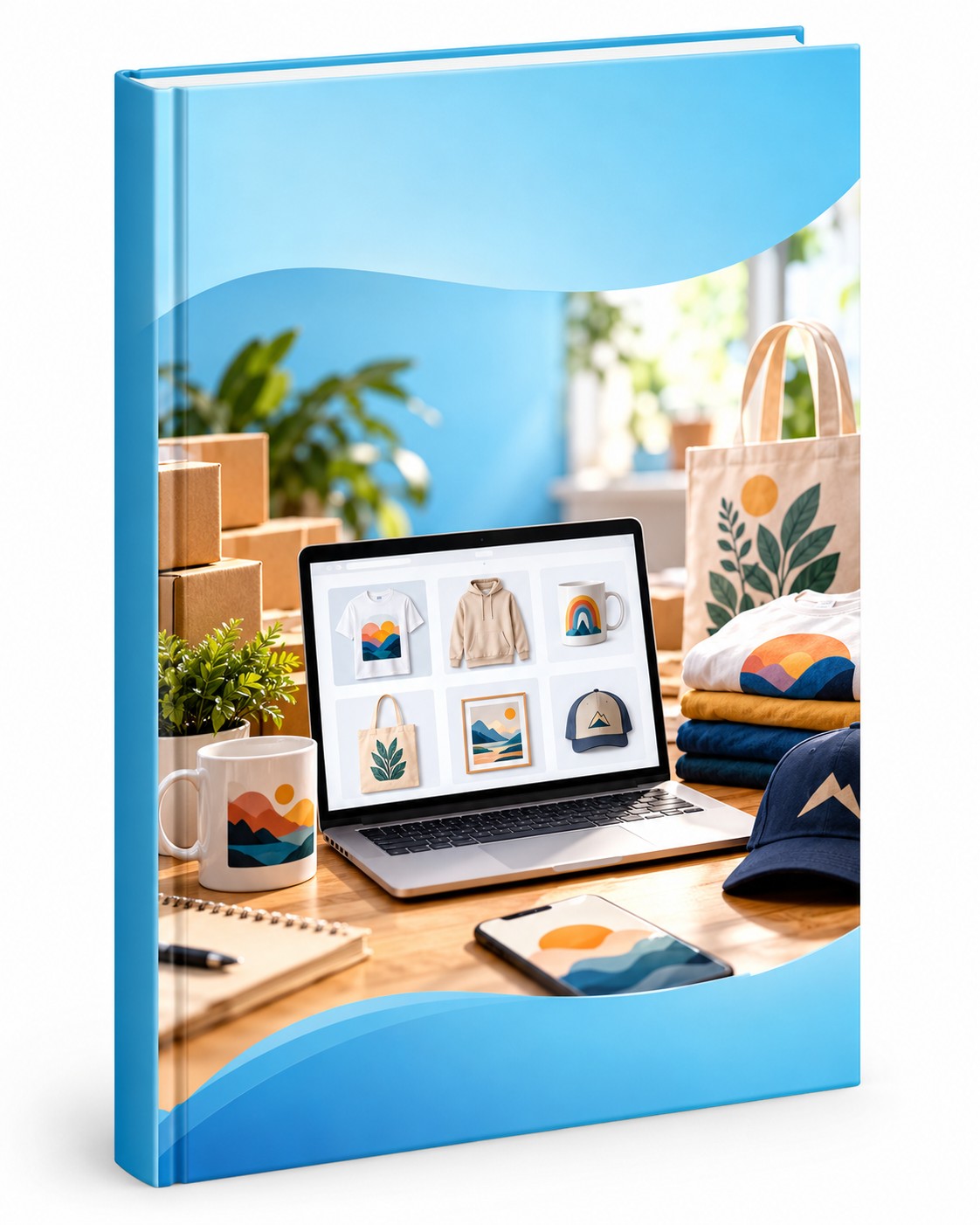
Download your free Print on Demand ebook
Enter your details and we will send you the ebook at no cost, along with information about the Zero Inventory Academy course.
A step by step launch checklist for 2026
Ten product ideas with niche examples
A guide to pricing and profit calculations
Immediate access to free course information
We respect your privacy. Please read our Privacy Policy. You can unsubscribe at any time.
Send me the free ebook
It takes less than a minute.
✓
You are in!
Check your inbox for your free ebook.
If you cannot find it, check your spam folder or contact hello@popne.com.
 PopneStudio